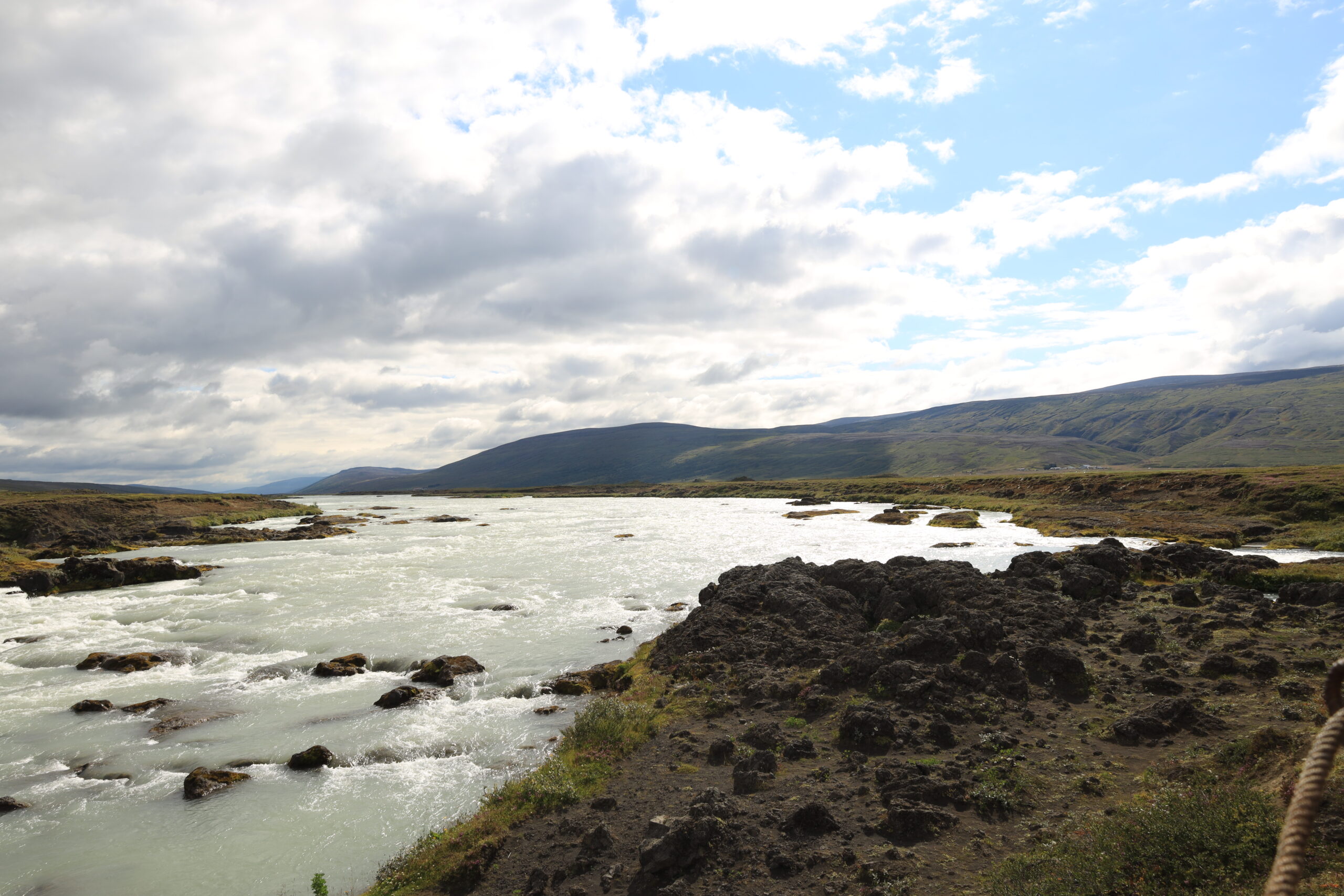
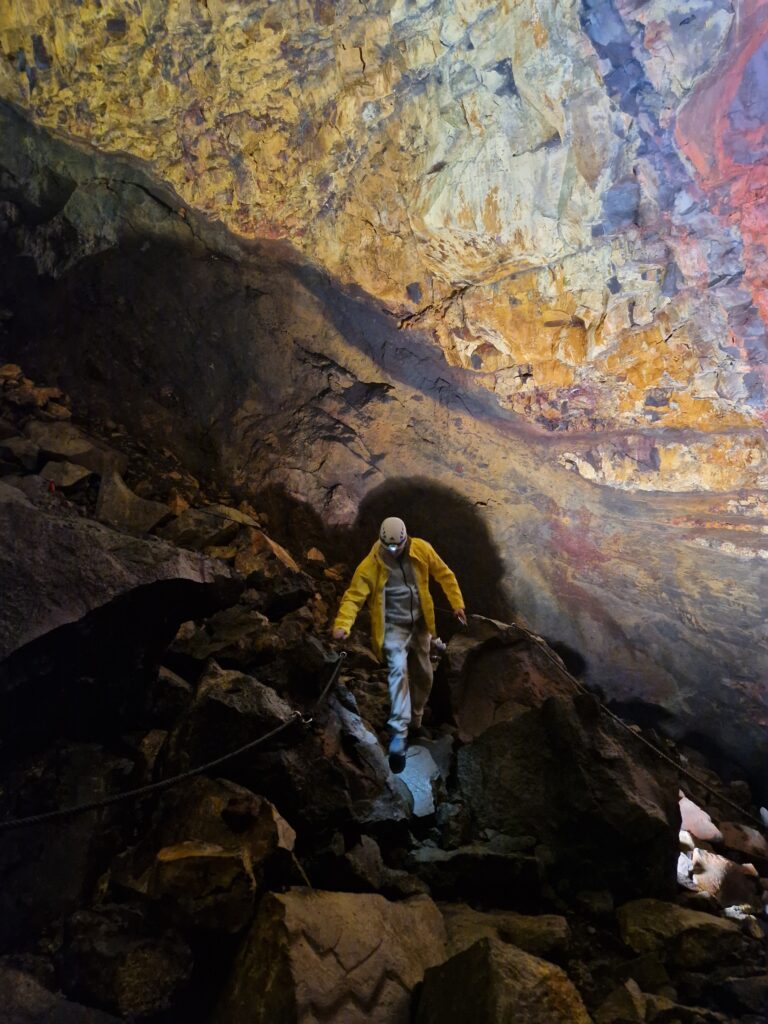
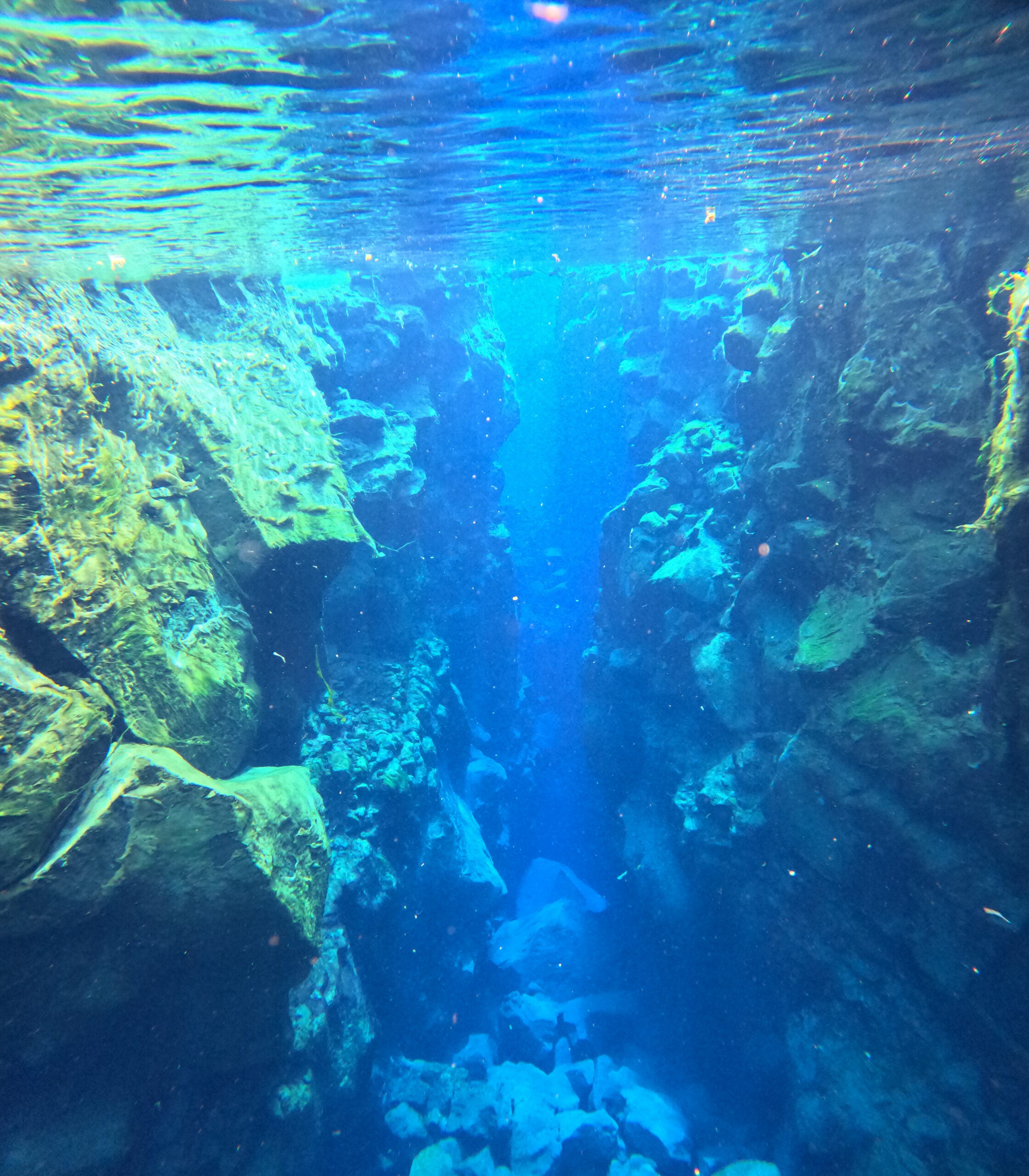
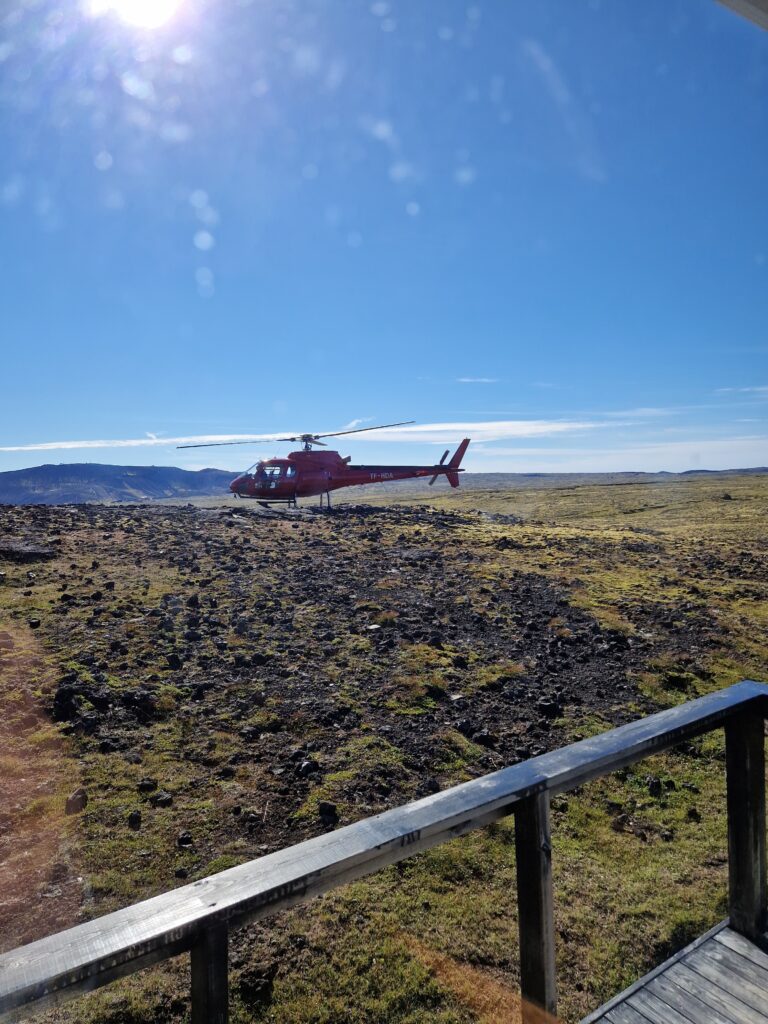
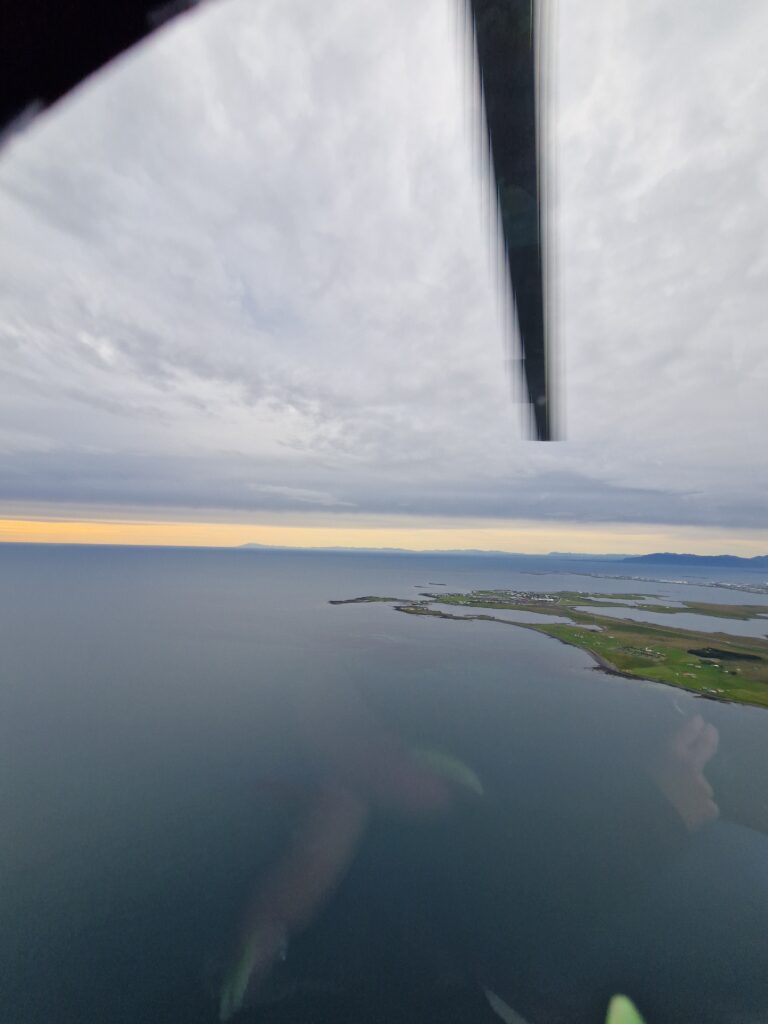
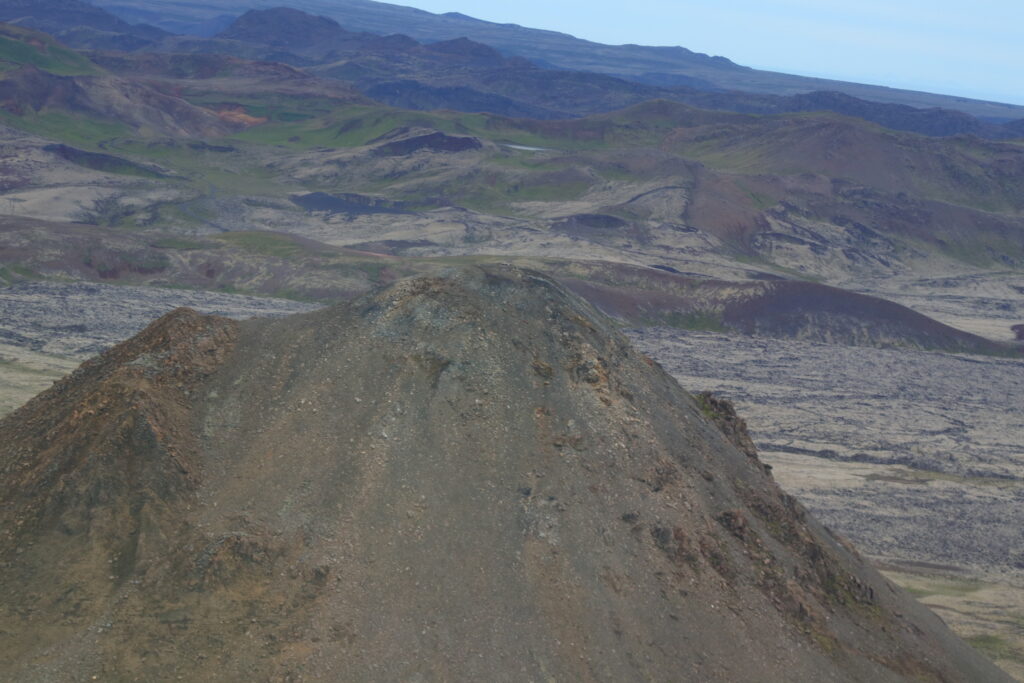
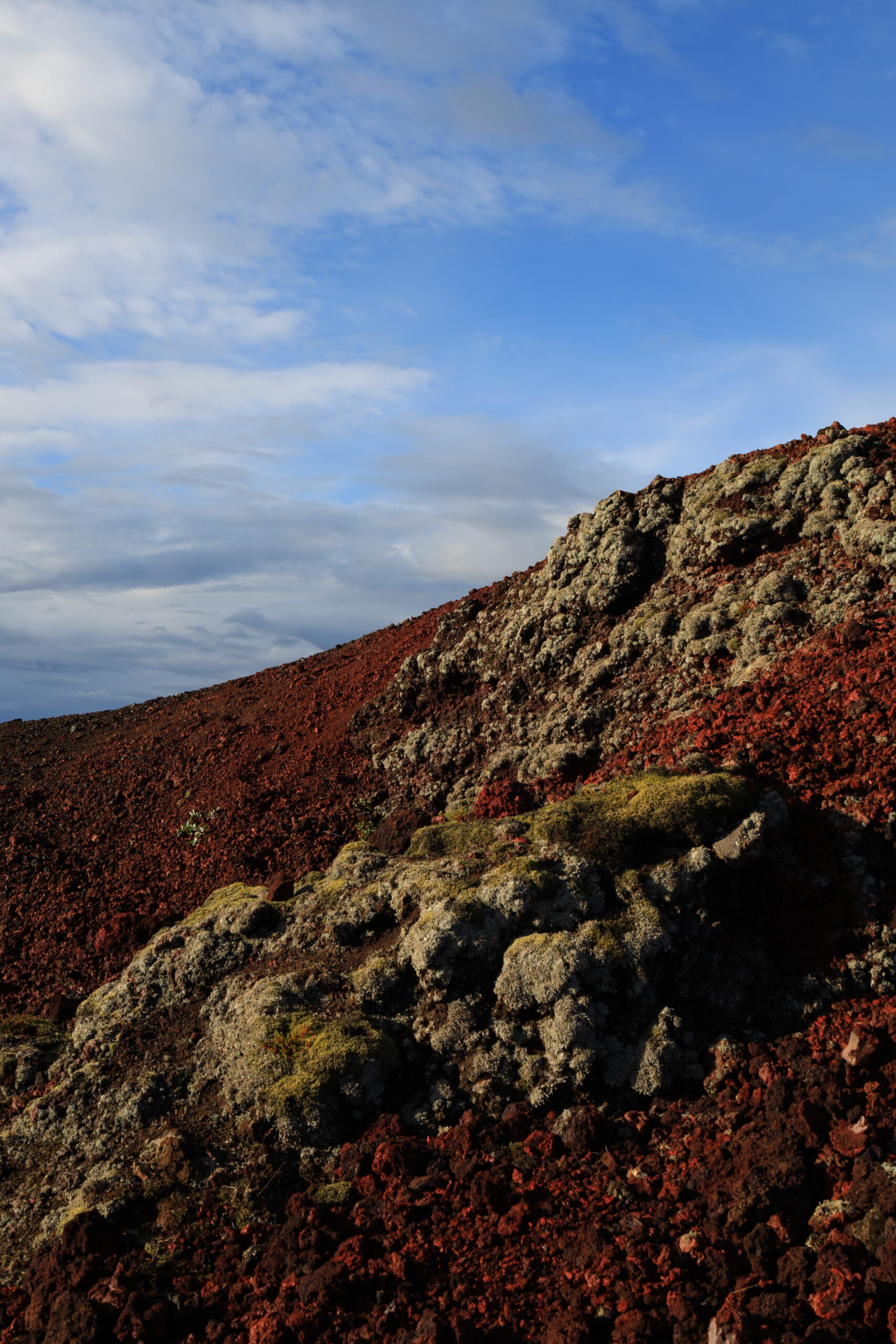
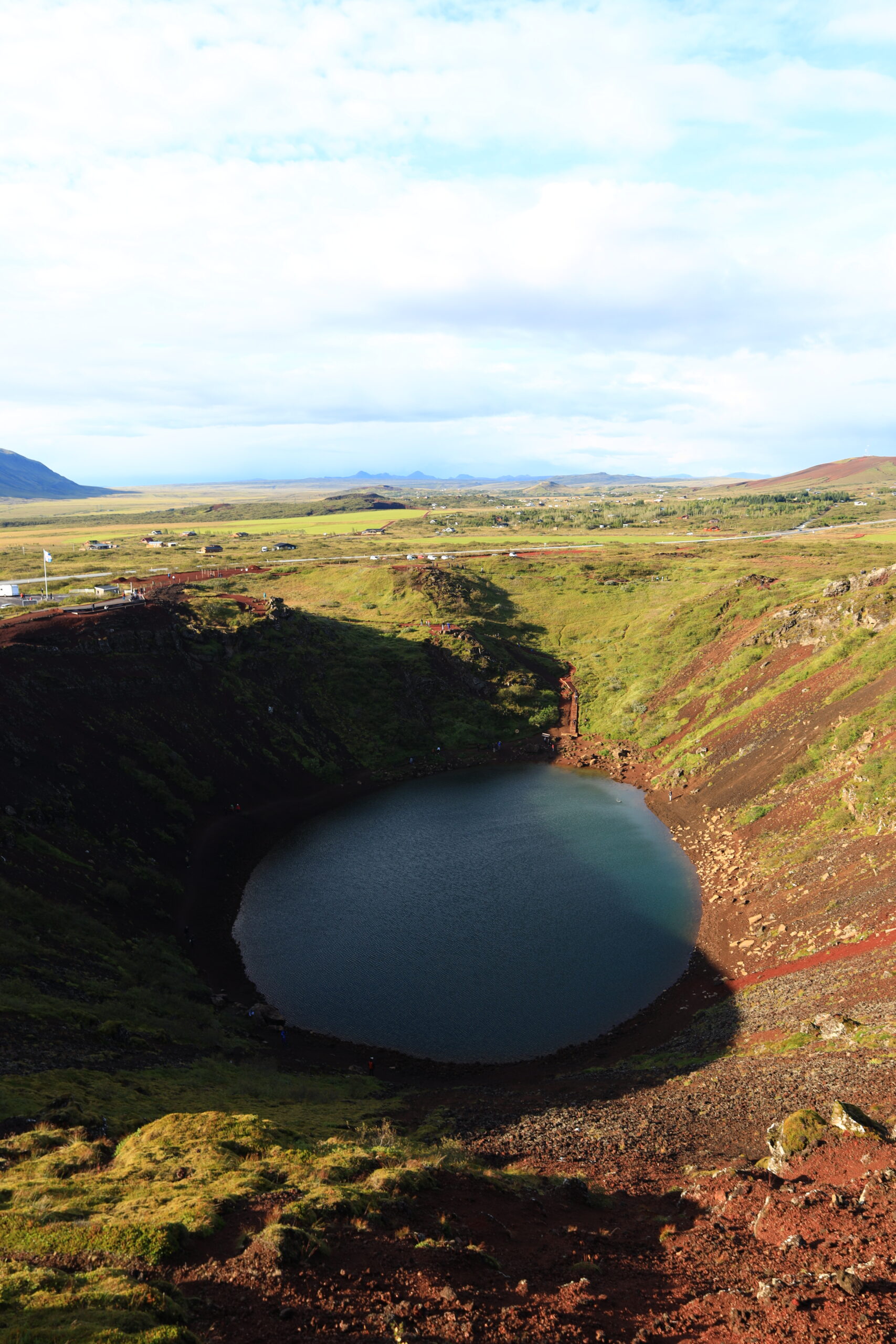
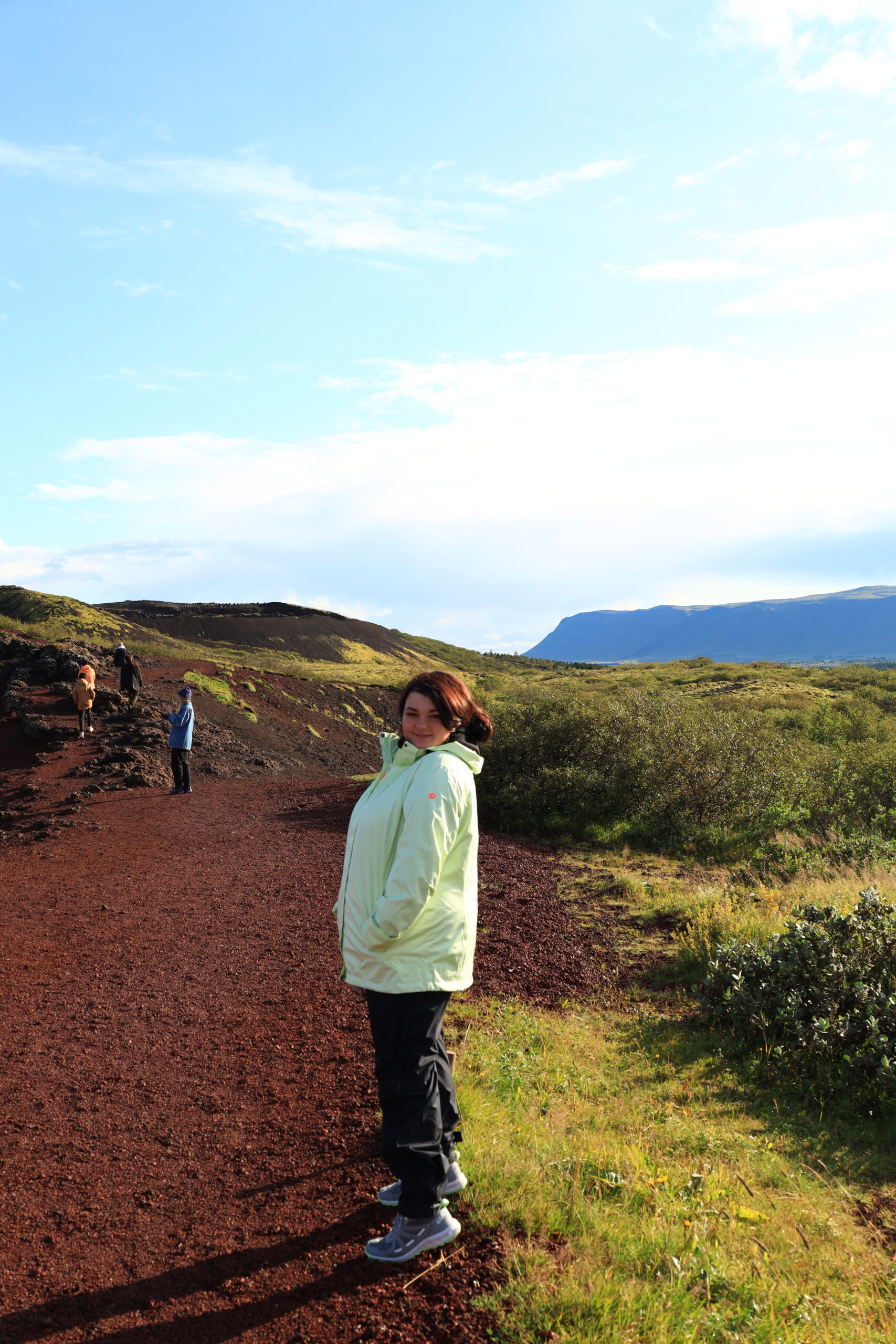
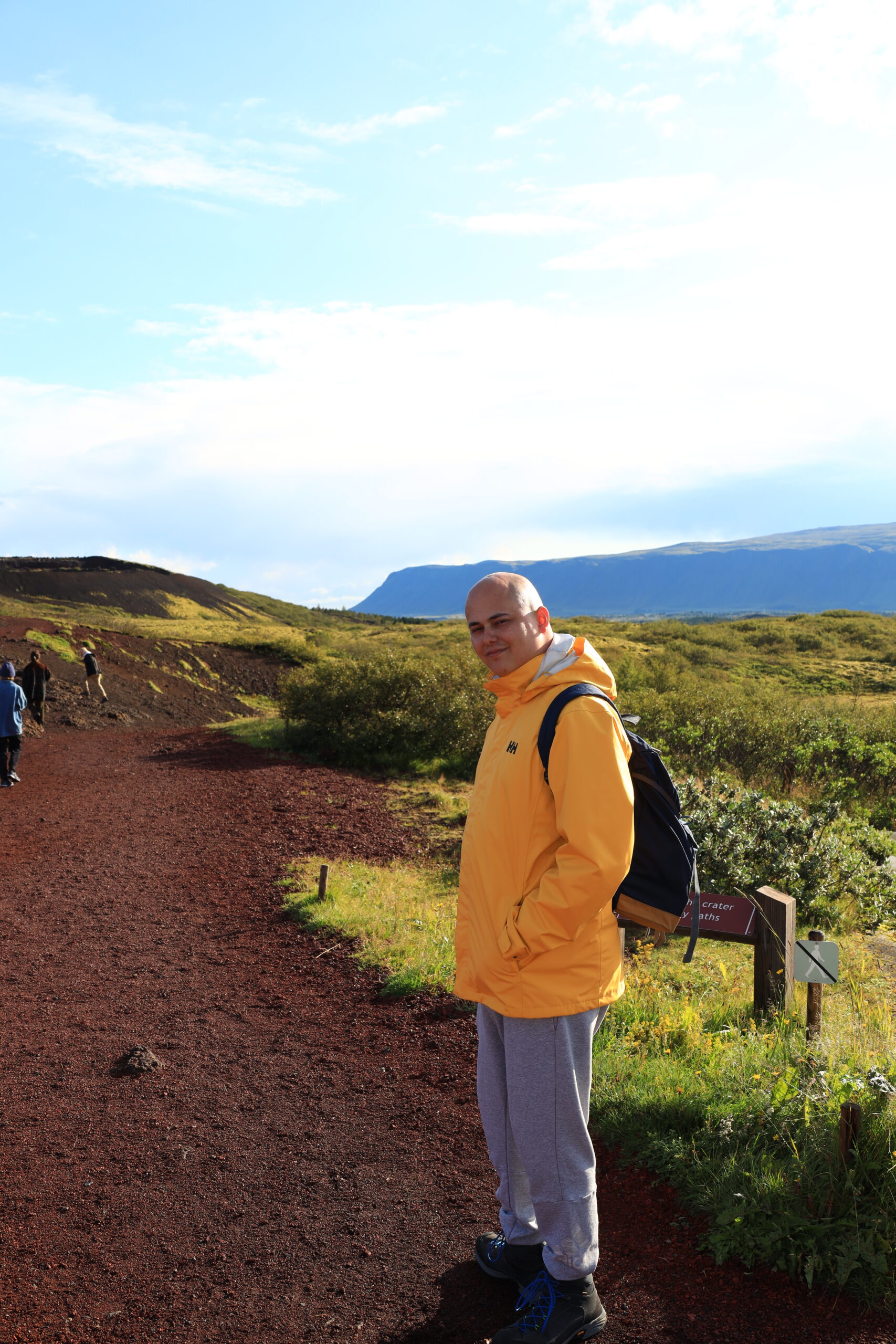
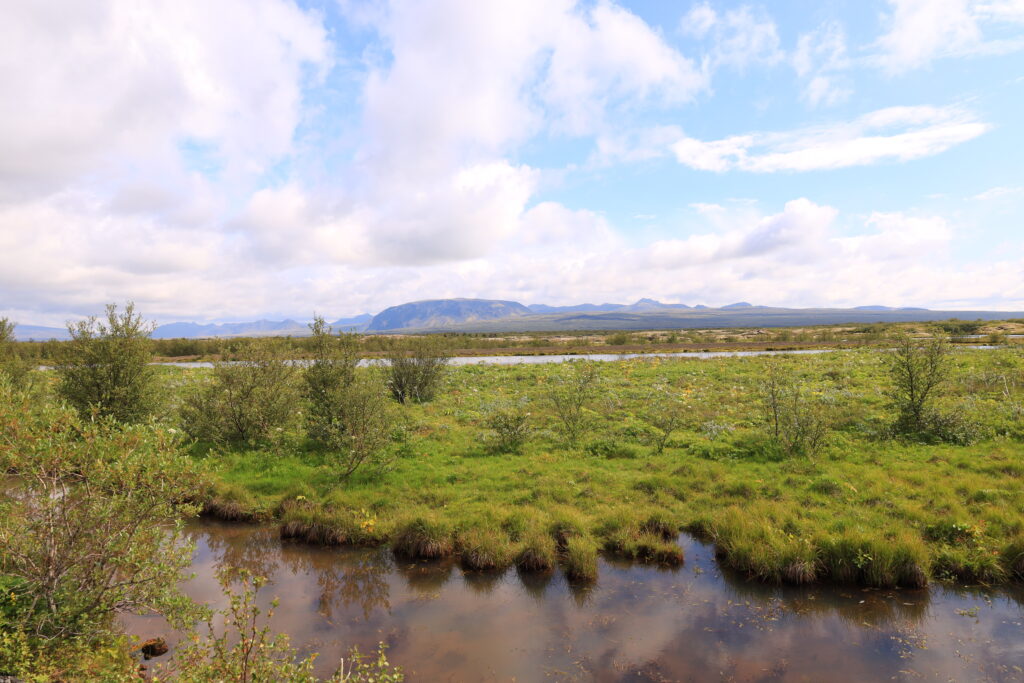
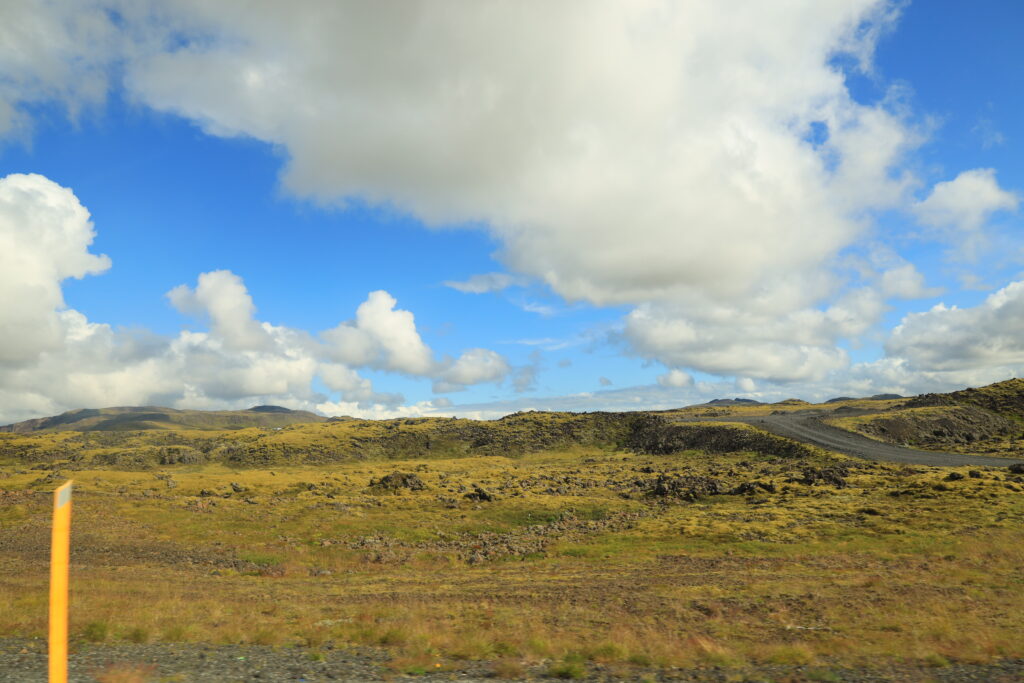
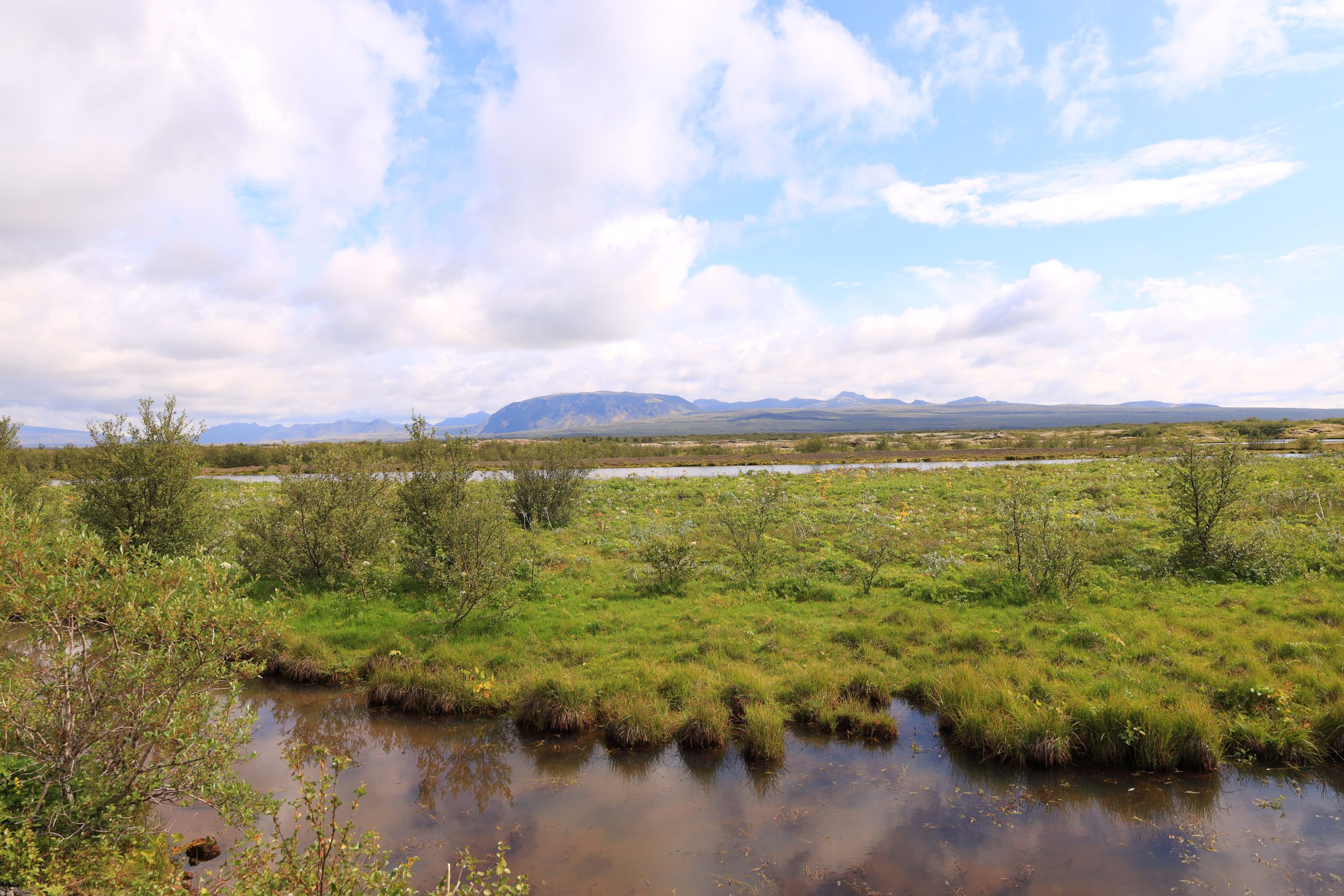
On August 10, we set off southward. The journey drags on—through endless expanses of lava fields, scree deserts, and green meadows. Variety is the order of the day: first it’s cold, then the sun comes out and we’re in T-shirts, then it pours down in buckets. Four seasons in a single day—that’s just everyday life here.
Near Vík, we sleep in a glamping tent at the Farmhouse Lodge. Sounds good, looks good, but isn’t restful. The strong, constant wind makes the tent noisy and not really cozy. On the plus side: hot springs in the evening, lamb stew at the table, and in the morning, the sound of sheep shaking the tent.
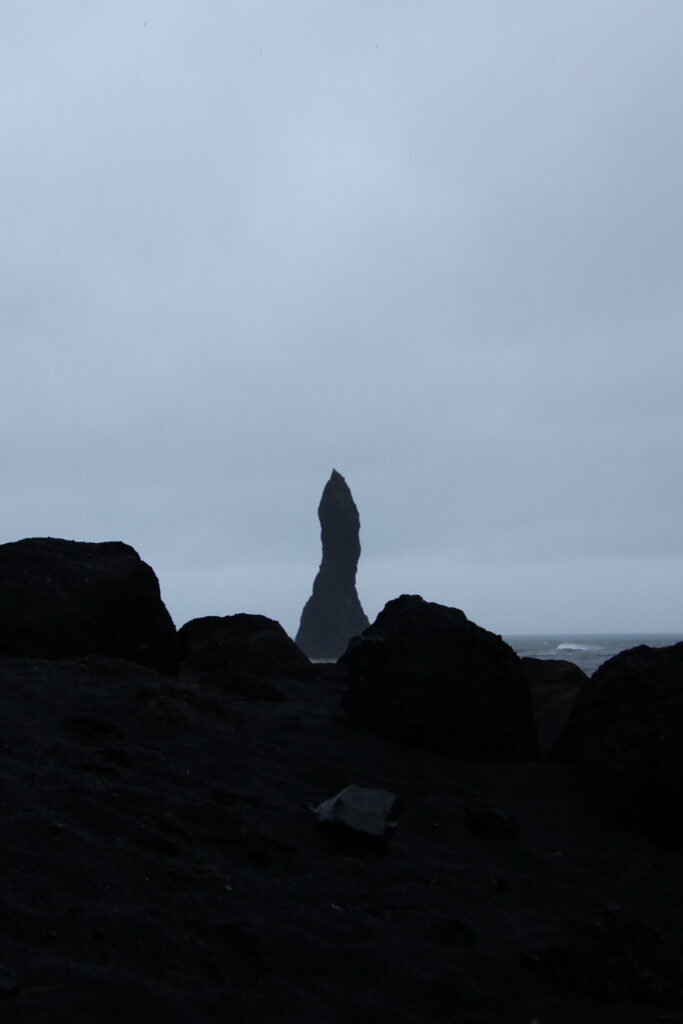
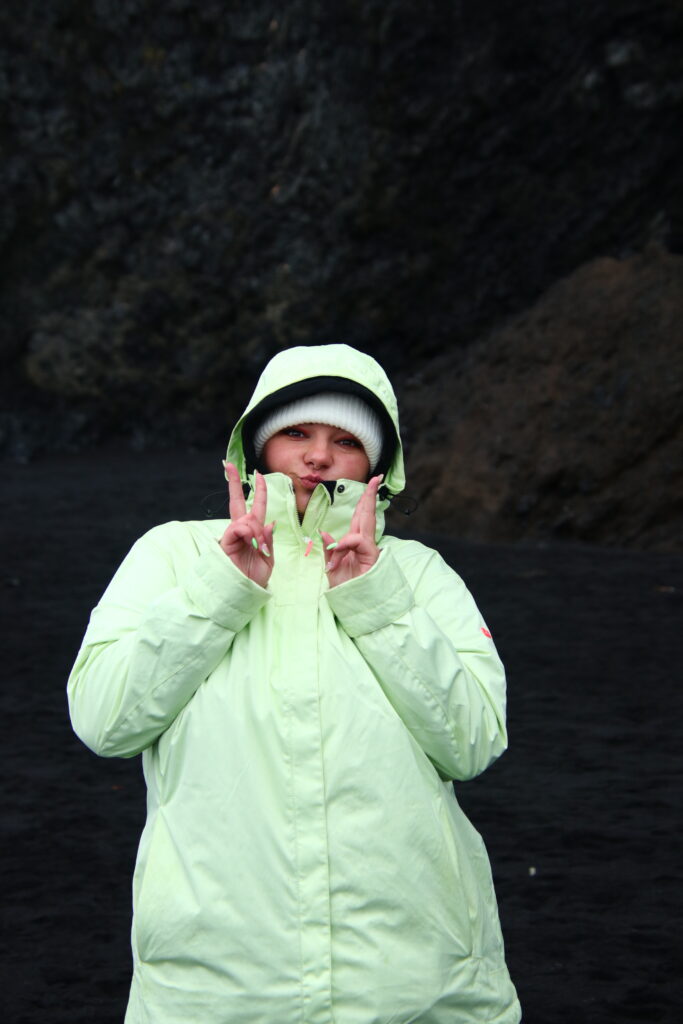
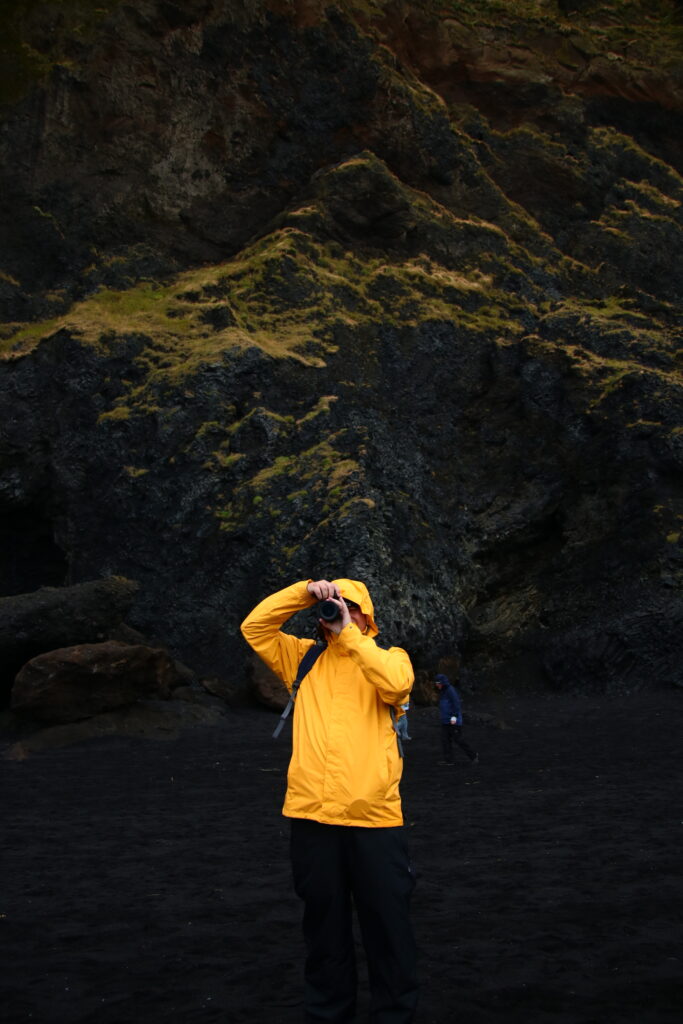
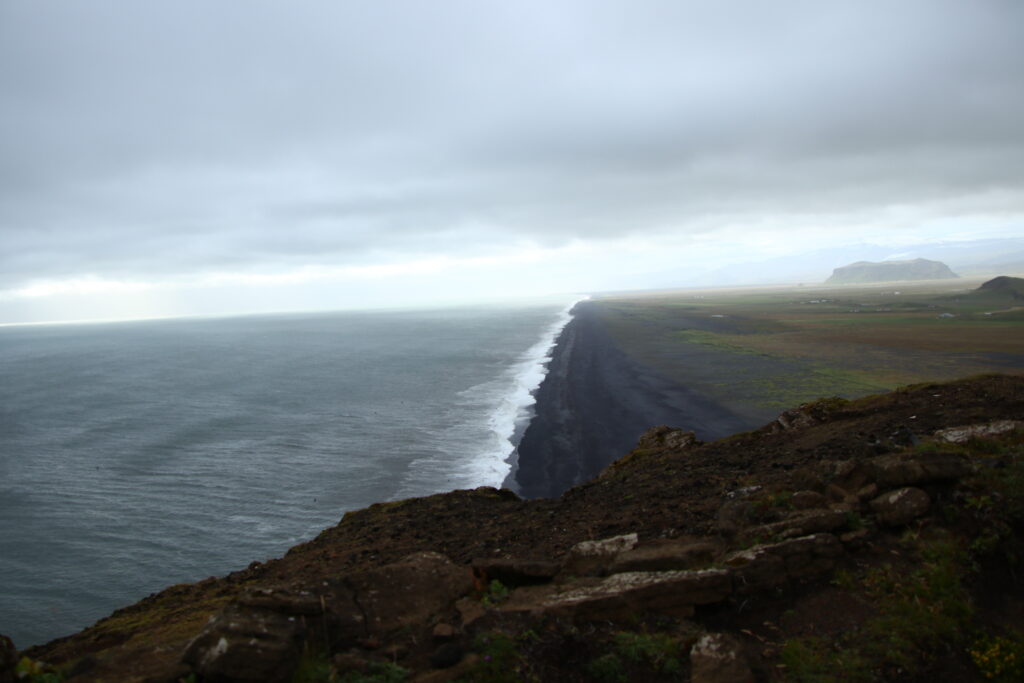
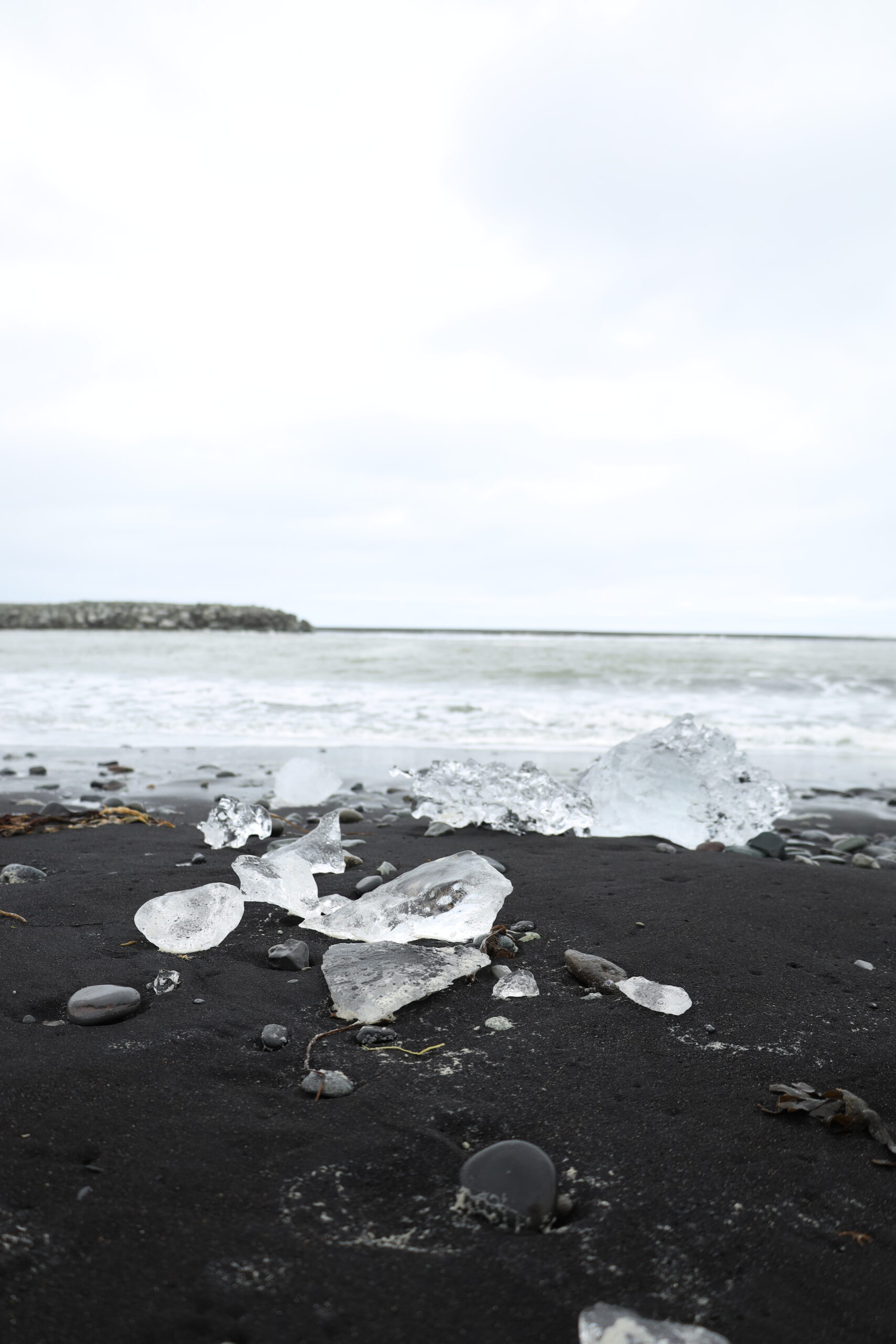
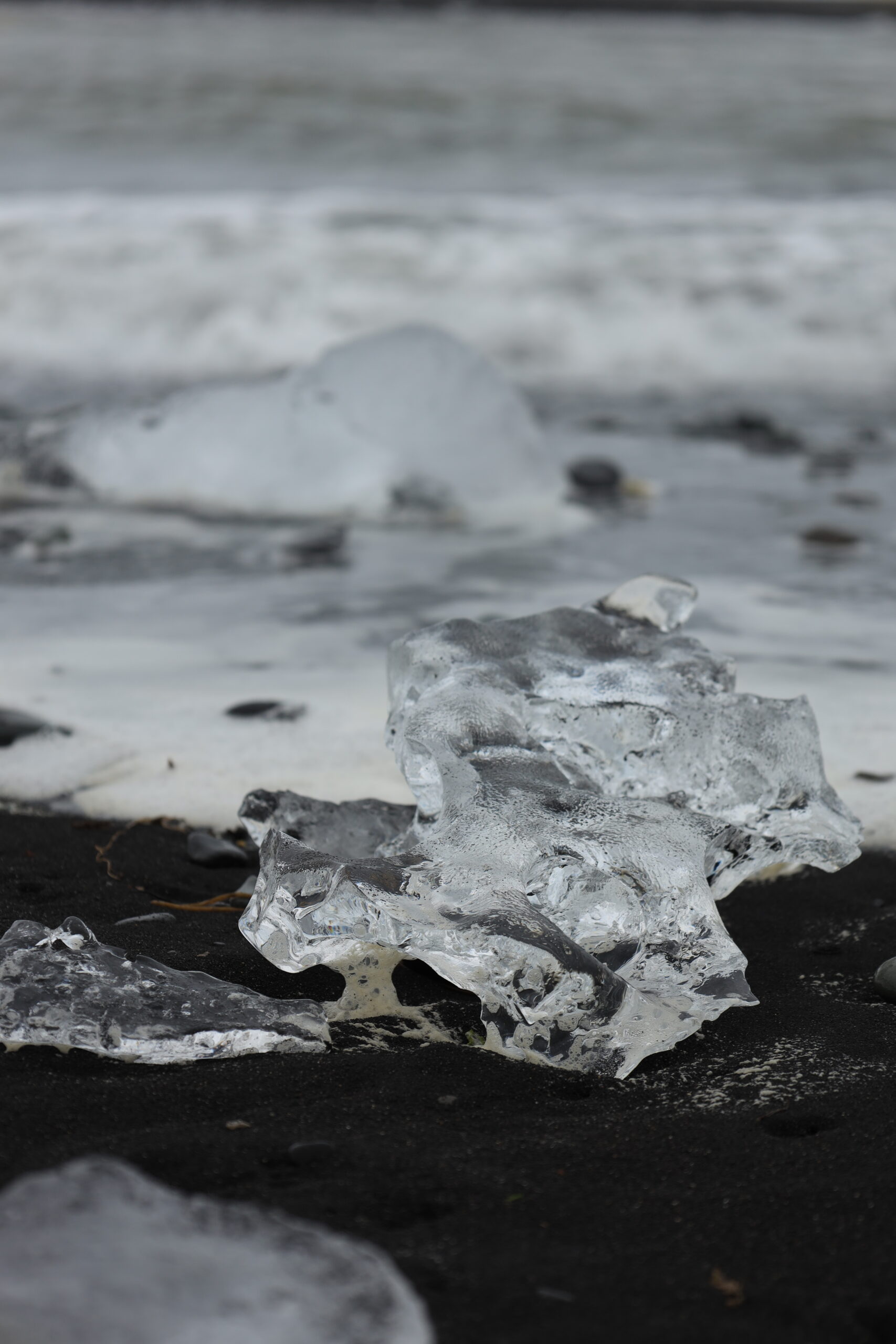
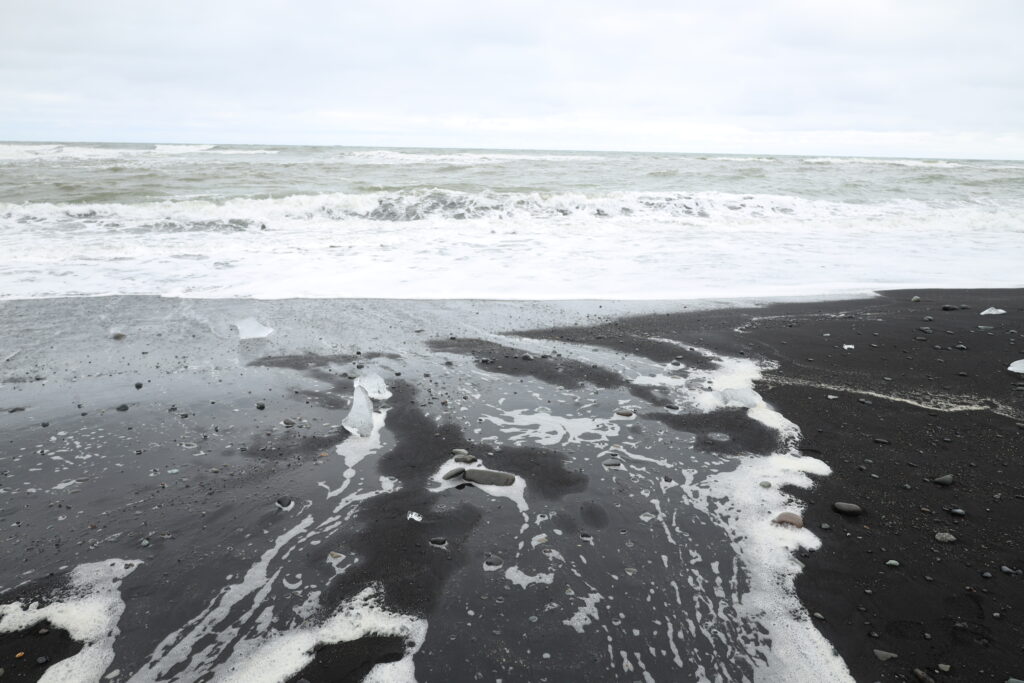
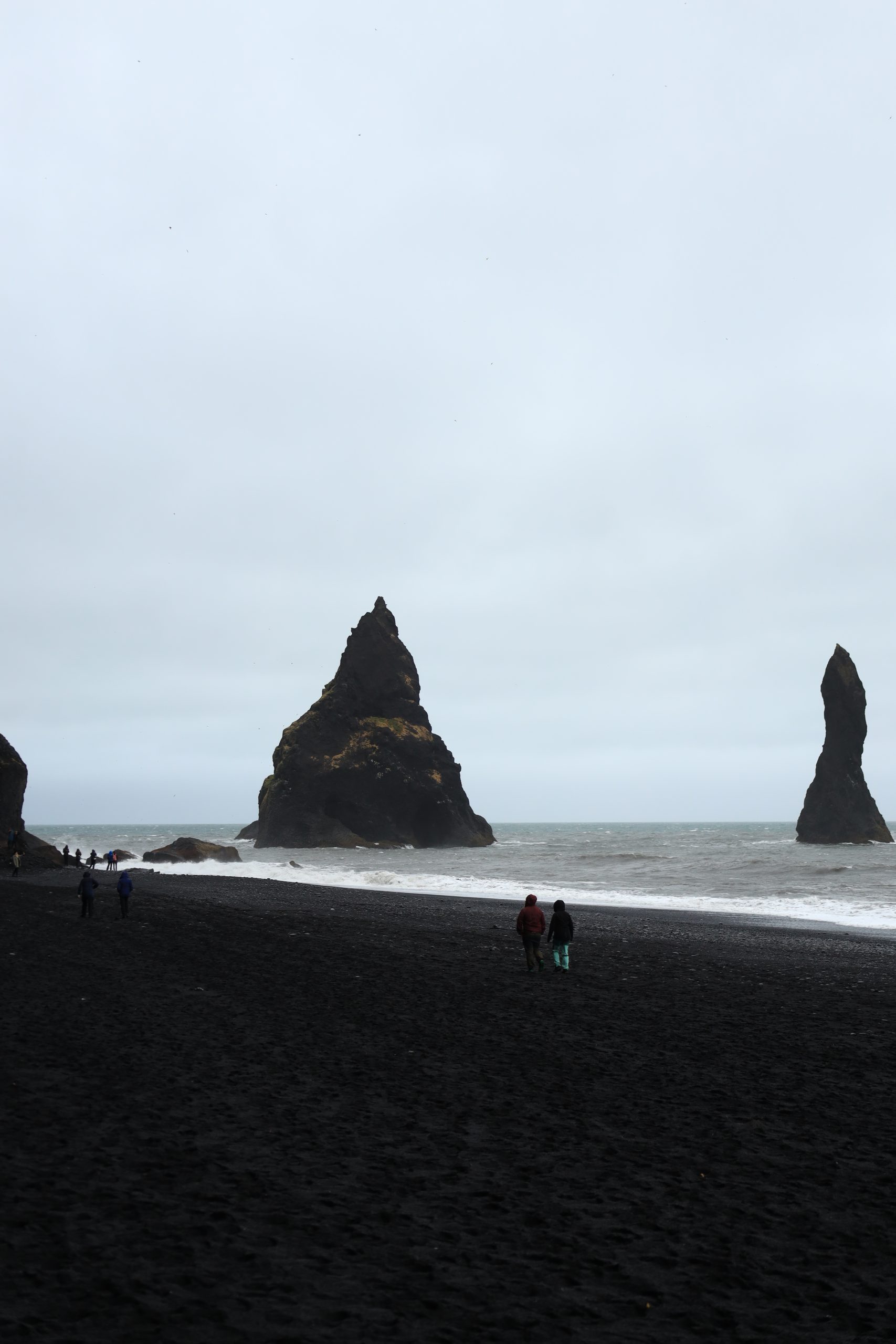
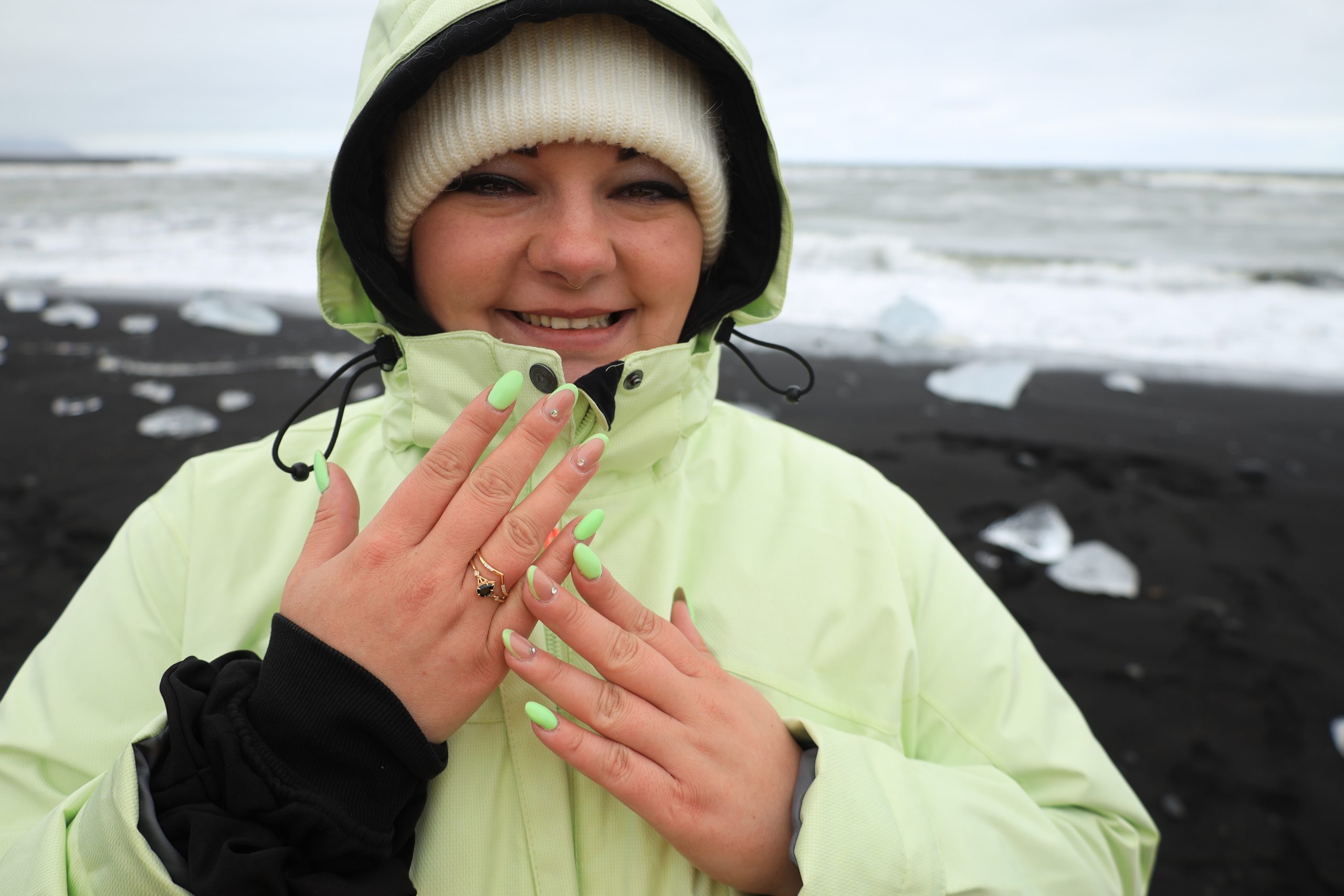
Reynisfjara: black beach, basalt columns like organ pipes, waves that crash with an indignation as if land were fundamentally a misunderstanding. Signs warn of “sneaker waves”—treacherous breakers that regularly sweep tourists away. We keep our distance from the water. Right next to it is the Hálsanefshellir Cave: a grotto of geometrically perfect basalt columns.
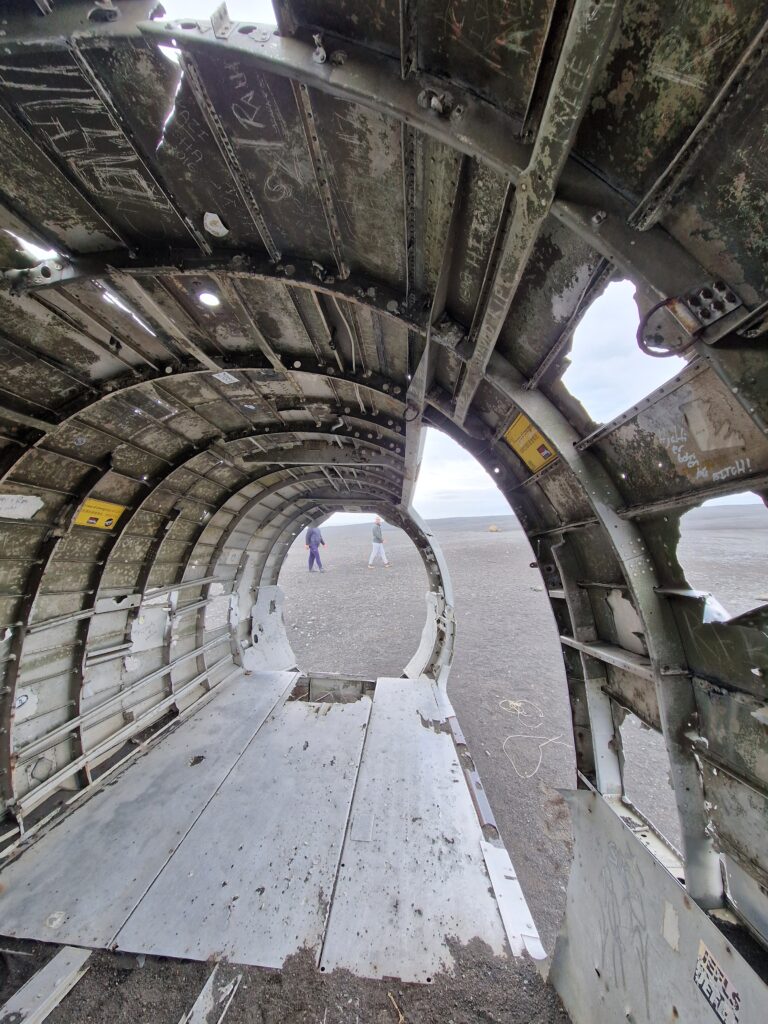
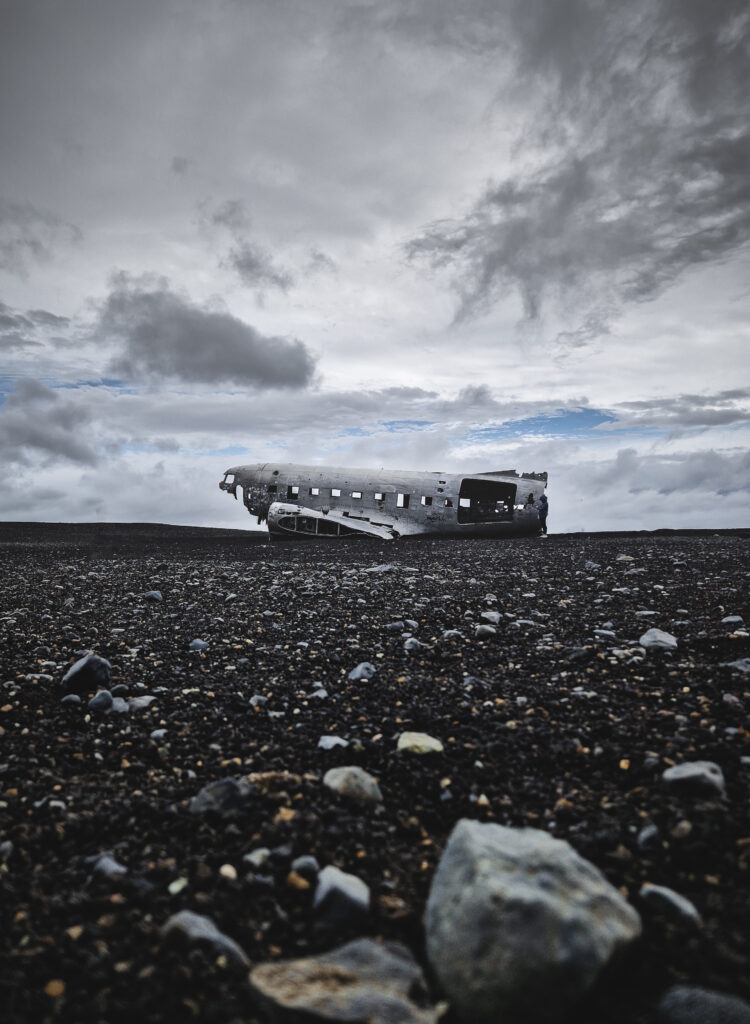
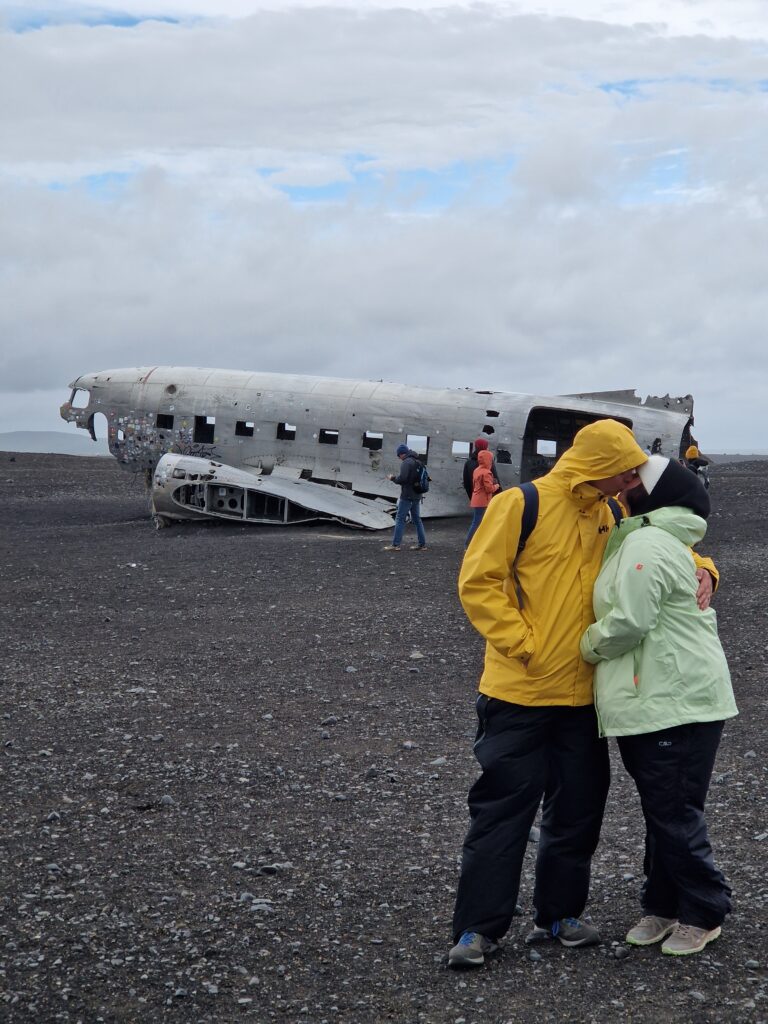
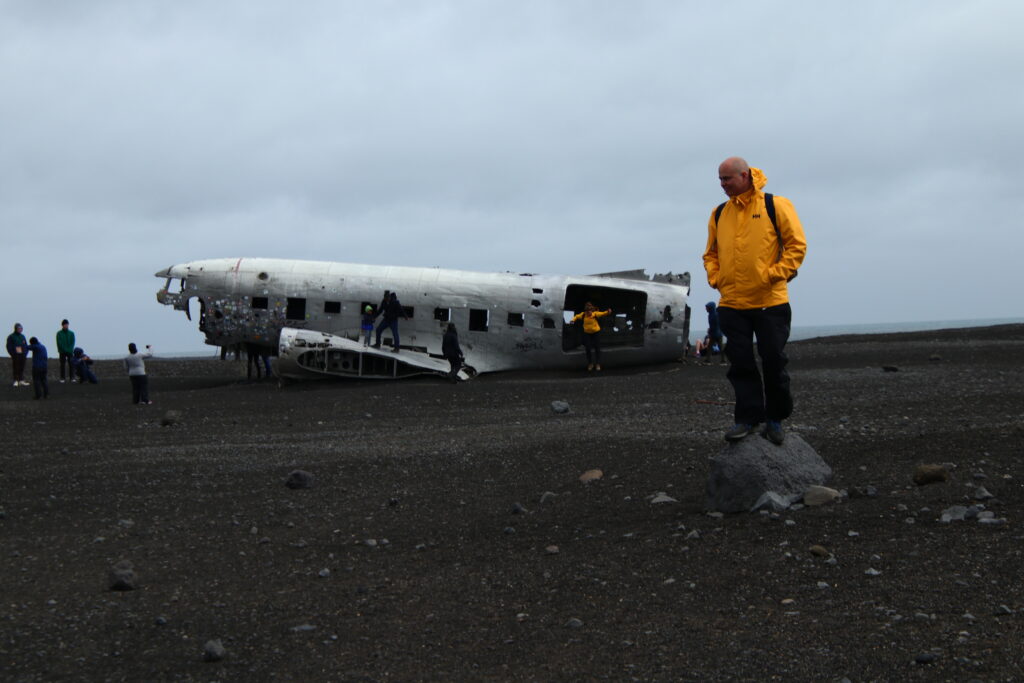
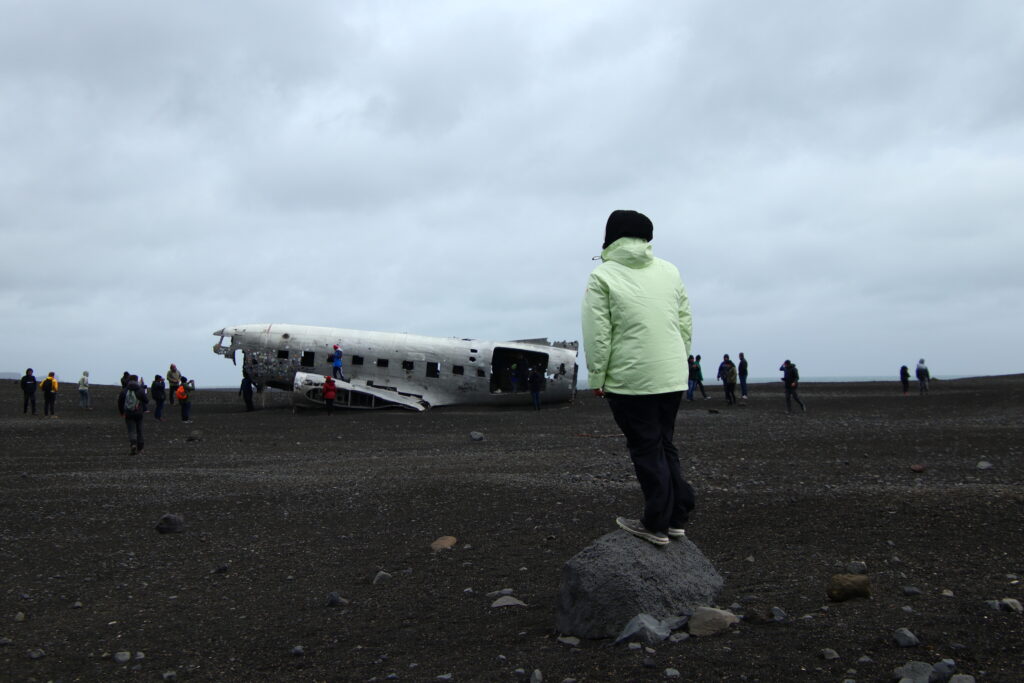
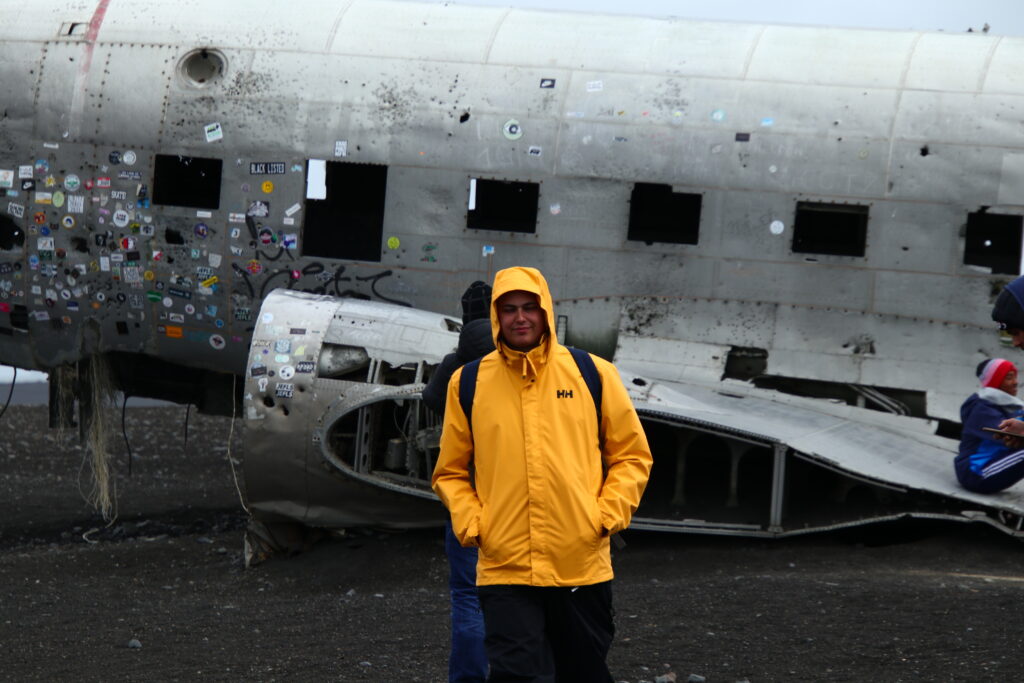
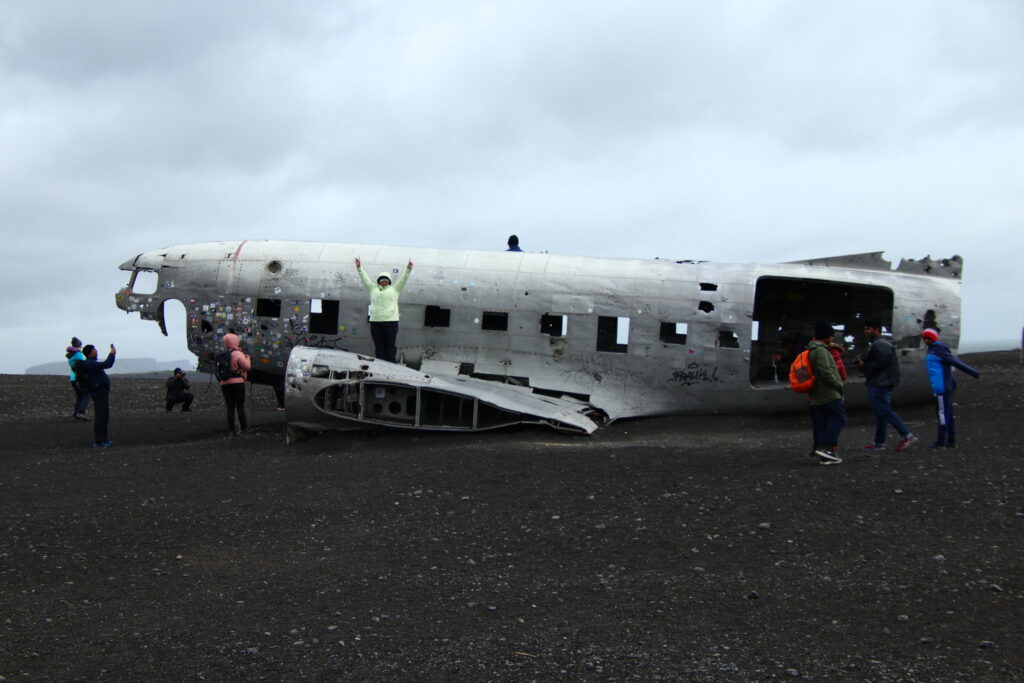
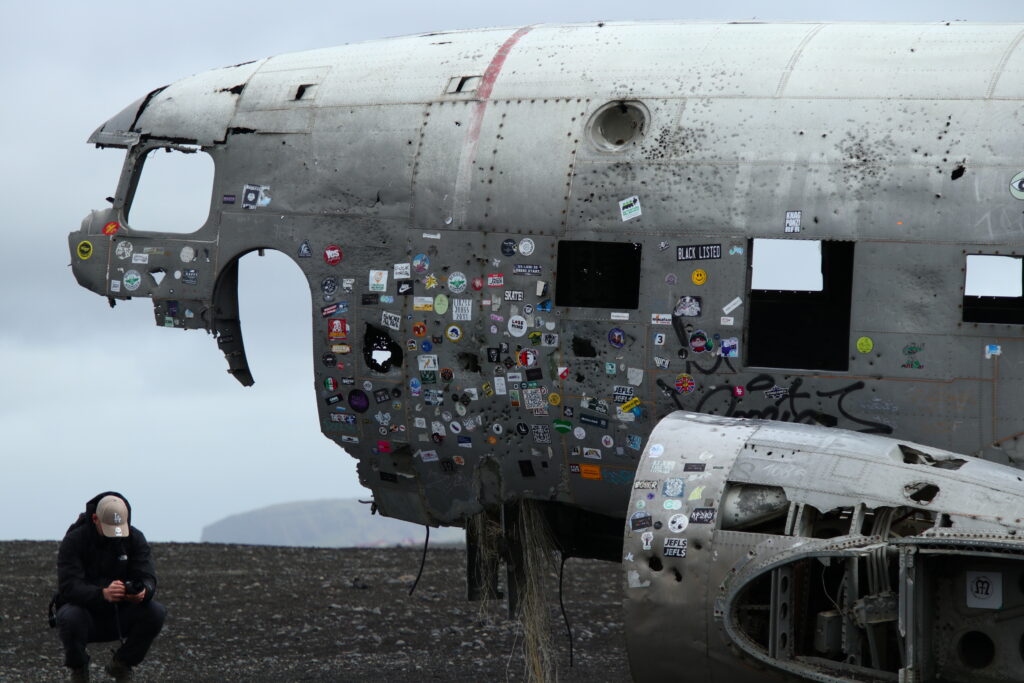
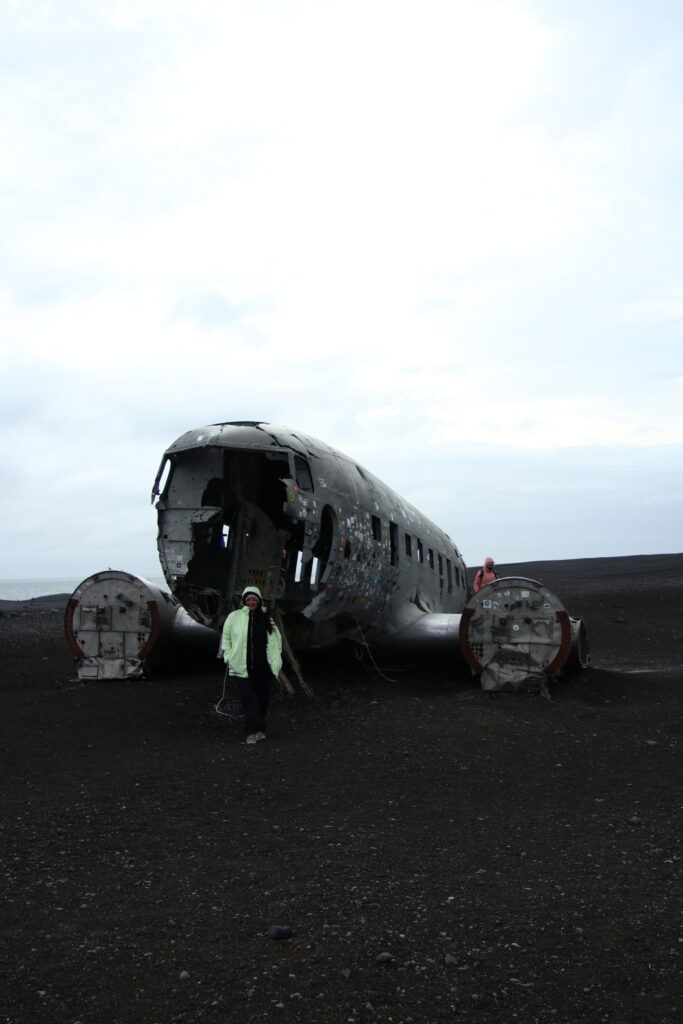
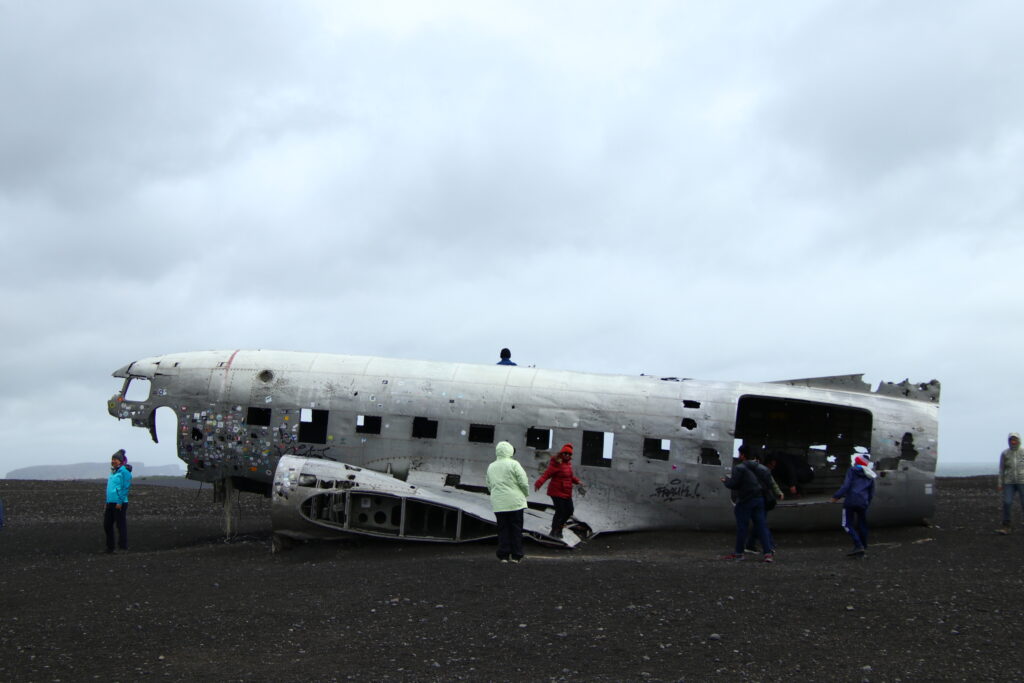
An hour later, the DC-3 wreck on Sólheimasandur—an airplane that crashed in 1973 (everyone survived) and has since lain in the black sand like an abandoned whale. A four-kilometer trek across a black planet, wind in our ears, ending at a dented aluminum hull. Then Hjörleifshöfði — the “Yoda Cave,” whose entrance looks like the head of a little green master. Star Wars jokes are mandatory here.
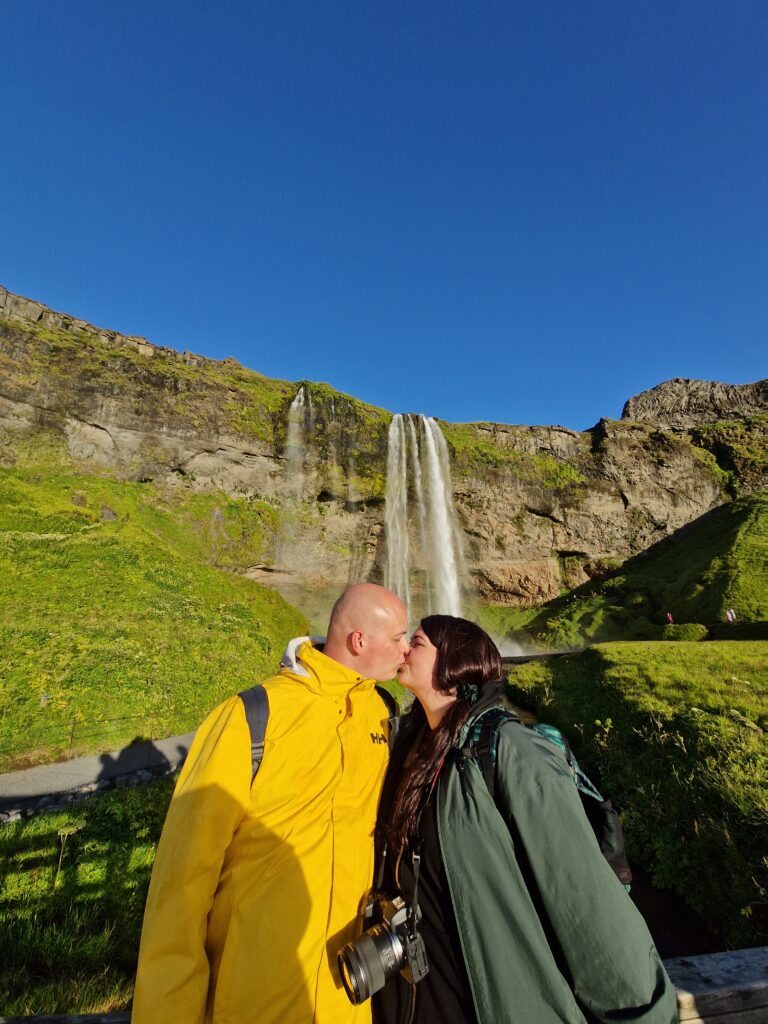
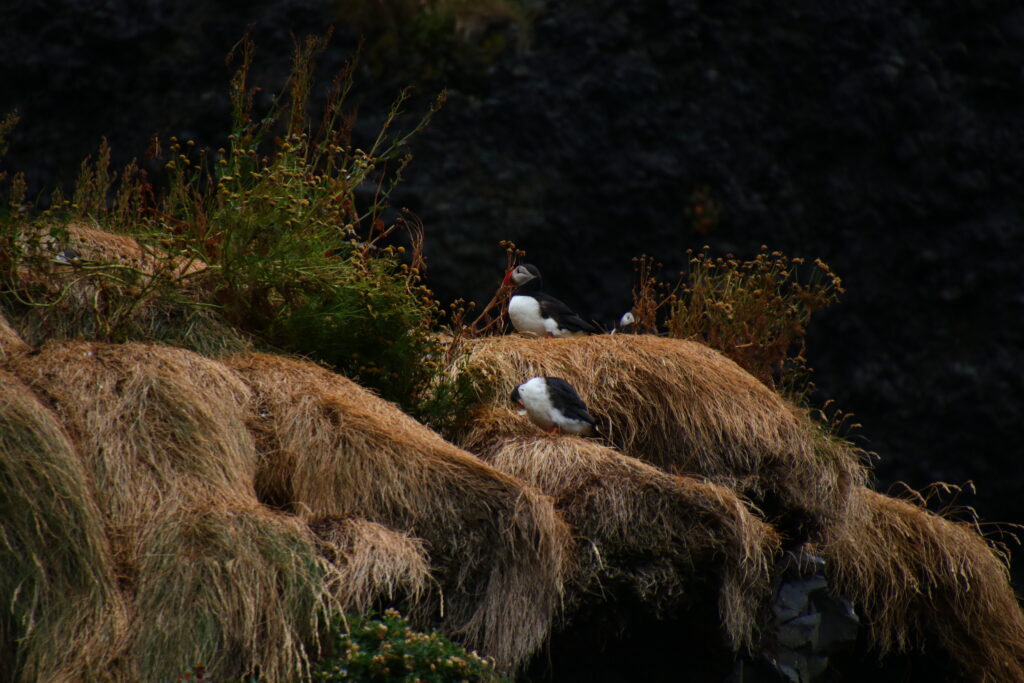
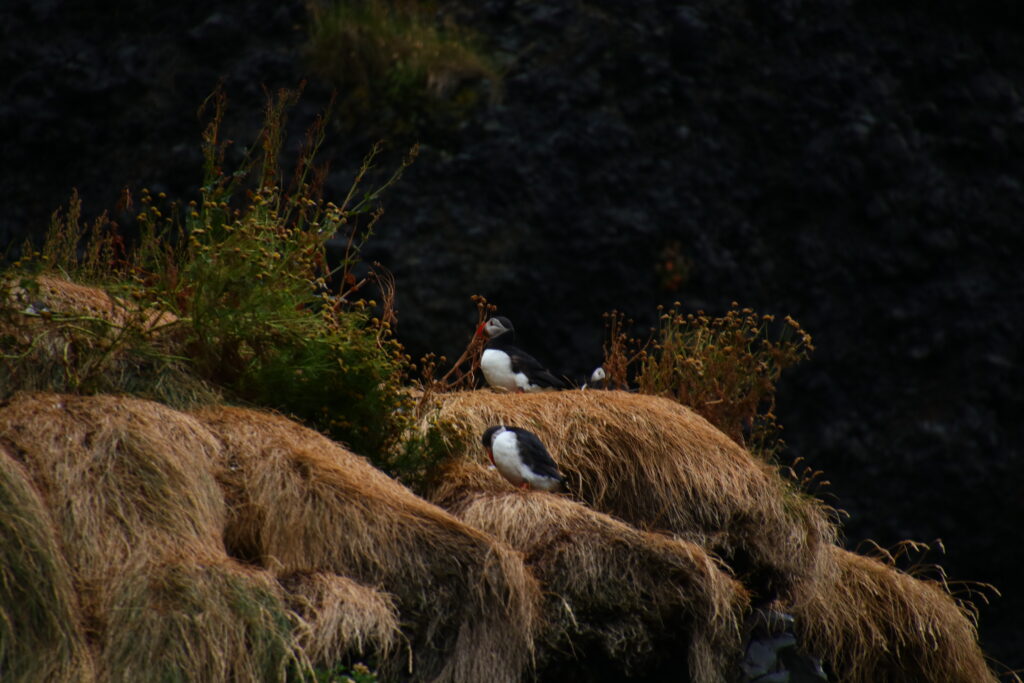
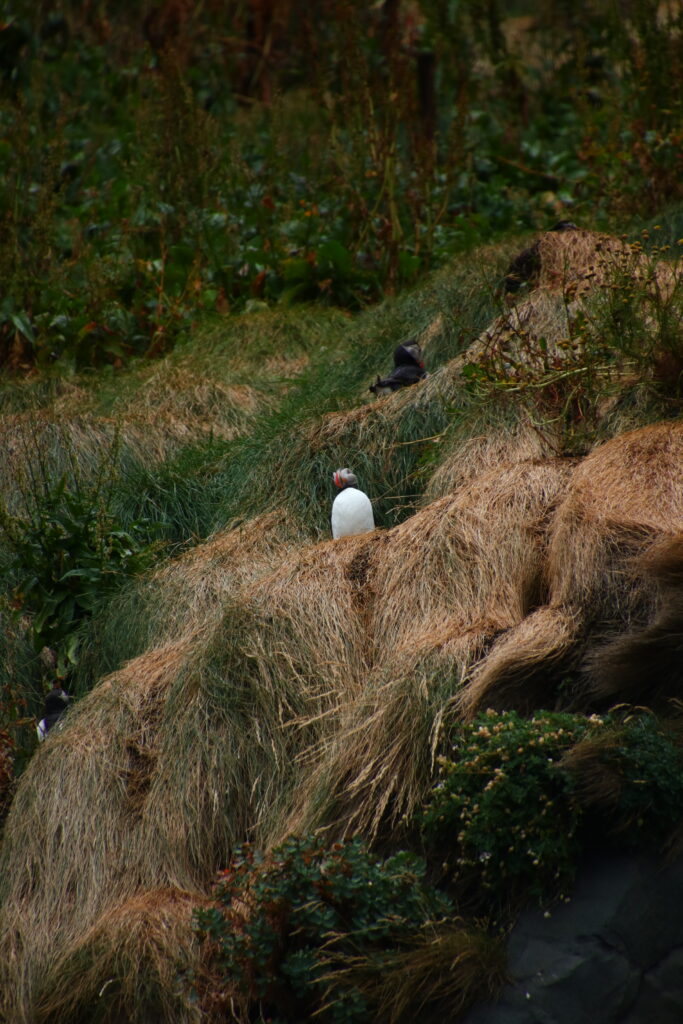
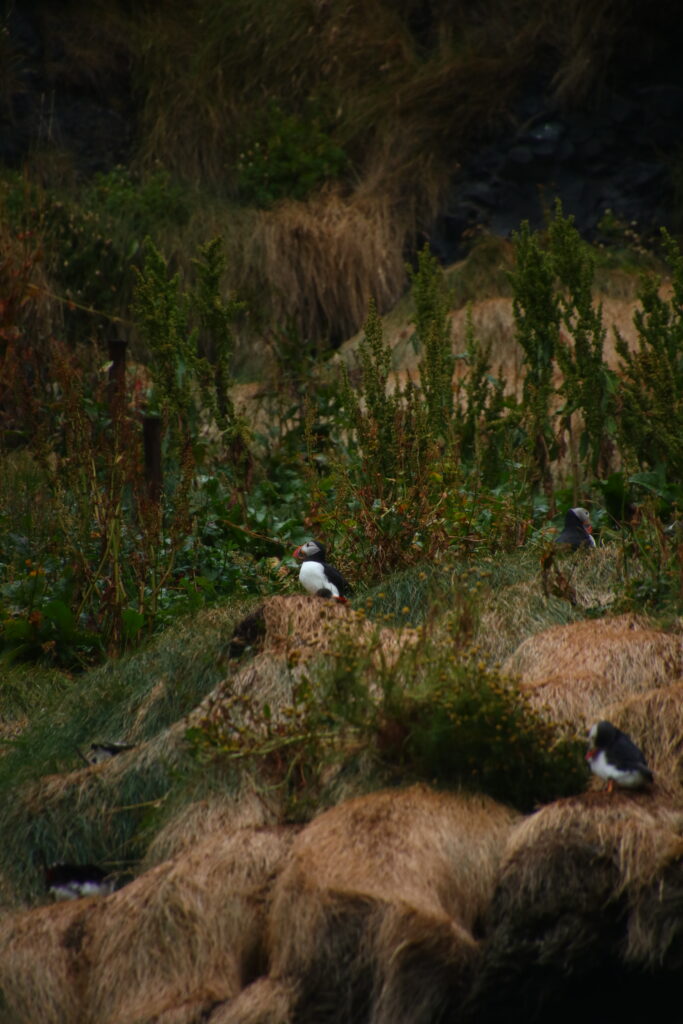
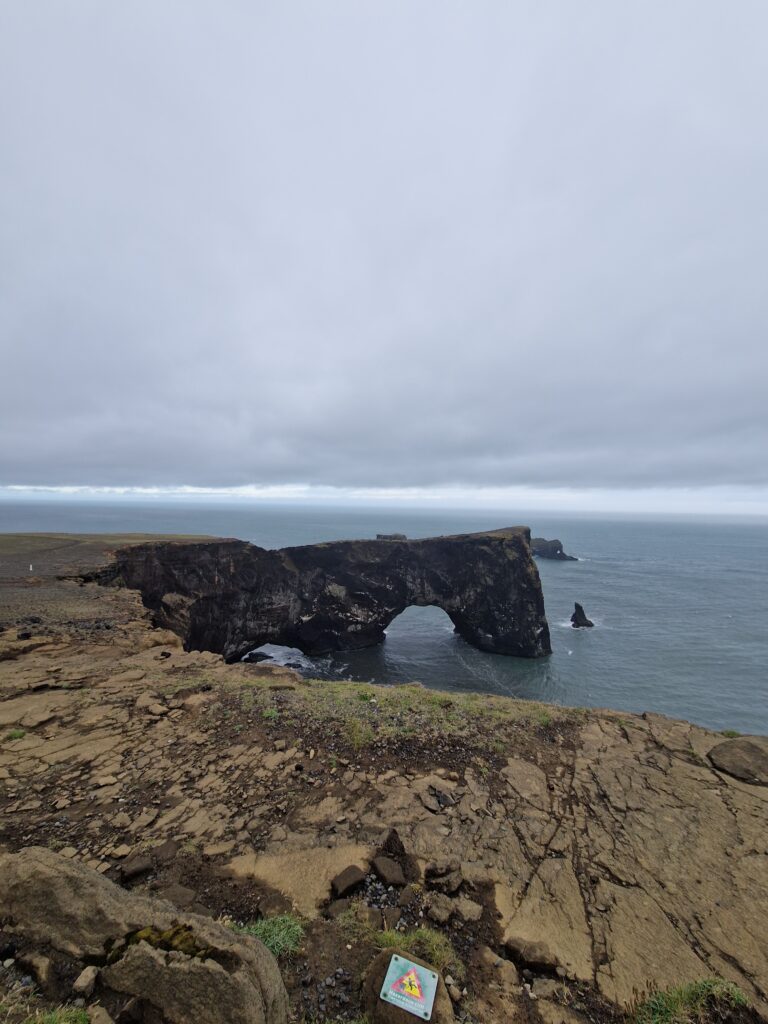
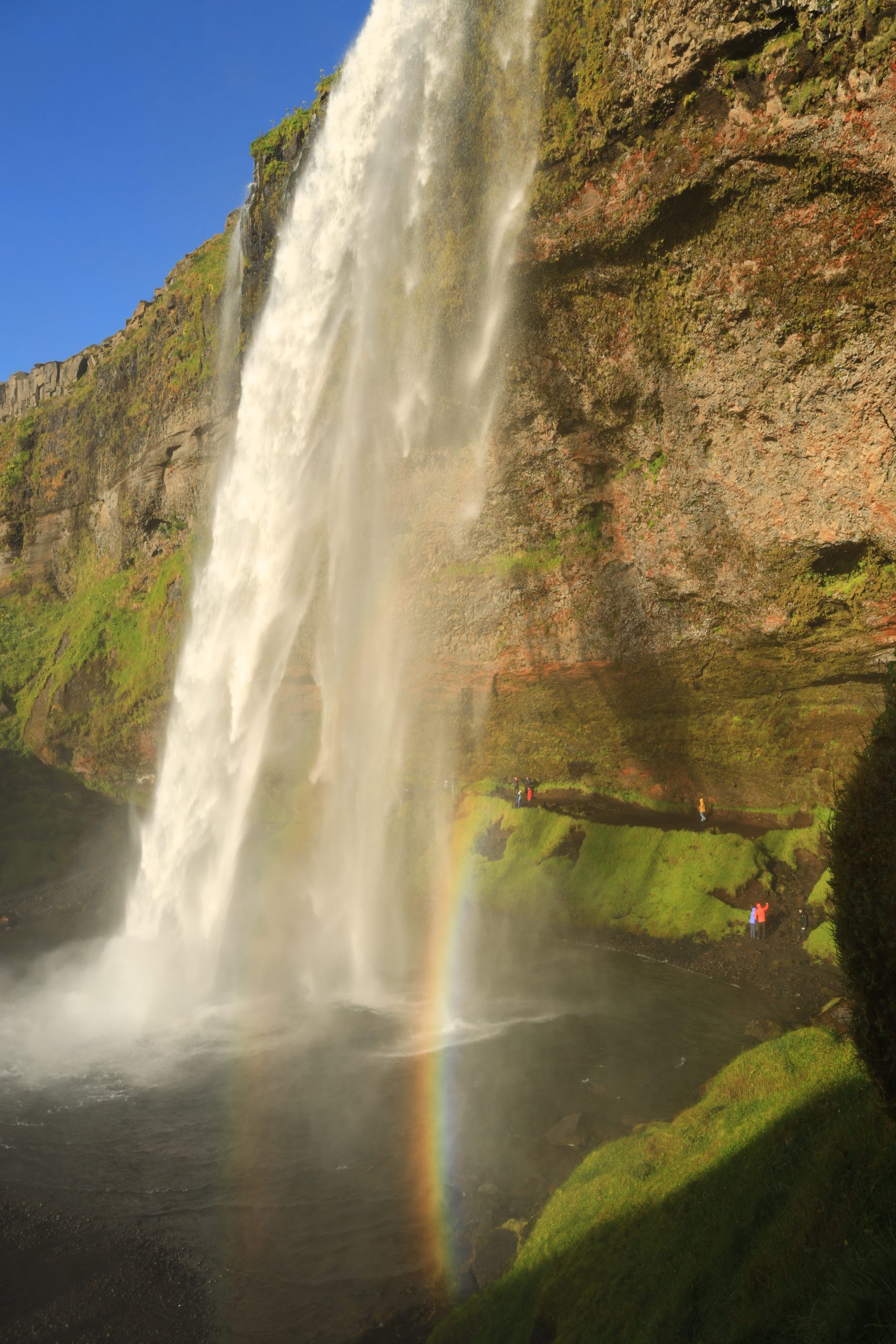
The day before: Skógafoss, 60 meters high and so close you can walk right up to it, getting your pants wet whether you want to or not. Dyrhólaey, the rock arch with puffins in the cliffs. And on the way, Seljalandsfoss—the ultimate fairy-tale waterfall, which you can walk right through.
Amazing food everywhere: seafood, black-crust pizza, lamb stew. Pizza with black dough sounds like a concept restaurant, but it tastes as if the Icelanders invented it because regular dough would be too boring.